
What is My Job? Facing the New UN Report (March 2023)

A group photo from the 2018 Cambridge Rise for Climate, which involved a number of local organisations coming together to demonstrate in the Market Square.
The UN has just released yet another report on where we are at in fighting climate change – and the news isn’t great. In 2015, in Paris, most of the countries of the world agreed to a target of a maximum of 1.5 degrees of global warming. This was based on years of research, and the pleas of a number of island and low-lying countries which argued that anything above 1.5 degrees would be a death sentence for them.
Eight years later, we are at about 1.1 degrees of warming above pre-industrial levels, and greenhouse gas emissions have gone up and up and up.
But hope is far from lost.
For one thing, progress is being made. New technologies, the number of people making an effort to modify their own emissions, and systemic thinking across every aspect of our civilization, from transport to farming, from buildings to the role nature plays in absorbing carbon, should eventually make a difference. With a massive effort, the UN argues, we could still stay below 1.5 degrees – if we stop pumping fossil fuels out of the ground and invest in carbon capture, anyway.
And if we don’t manage that target, well, every tenth of a degree of warming still matters. As Mark Lynas lays out in his book Six Degrees, every increment affects how much ice will melt, and thus how far sea levels will rise, and it also affects the total energy of the earth’s weather systems – more heat equals more energy, equals bigger storms, equals bigger and more frequent extreme events like heat waves and hurricanes.
So there would be an enormous difference between 1.5 degrees and 2 degrees, for example. Just think about the impacts we’ve seen at just 1.1 degree of warming – record breaking fires, floods and drought across the entire world.
Even if we do blow past the 1.5-degree goal, then, we have to continue to hope and work toward not letting it go higher – and eventually even bringing it back down again. Though obviously that will probably be tragically too late for places like Kiribati, and likely for many of our current biospheres and the creatures which live there.
A Storm of Emotions
When people first start paying attention to what’s going on they often feel enormous anger that the world didn’t act fifty years ago, when scientists began sounding the warnings about carbon dioxide and its effects on global temperature. If we’d started acting then, we’d be laughing, and many lives would have been saved. But we didn’t.
Just as often, people feel terrible grief, over the natural world so under siege, and the innocent people suffering.
I’ve certainly felt, and still feel, both of those emotions, sometimes almost unbearably.
I’m not sure, though, that either emotion is worth indulging. Anger at people of the past, who had less reason to trust the science of the time than we do, seems pointless. Like many of us, they believed and hoped that solutions would be found which wouldn’t inconvenience them. Democratic leaders had other concerns that people cared about more – like education, poverty, and conflict.
And grief…well, that’s tougher for me. But one thing that helps me is to try to grasp Earth’s long history of life. I recently found out that an ancestor of dragonflies was around a million years before the dinosaurs. Five mass global extinctions later, there are still dragonflies enchanting the summer. The few tens of thousands of years in which Earth has hosted human beings almost seem insignificant against the vast span of millennia in which plants, fish, insects and reptiles have dominated. Over and over again, life has found a way. Not the life we are used to. Not the creatures we love now. But life.
A Transition Generation
So those thoughts keep me sane, but given I have them, why do I work so hard on my local eco group? I’m only a little, ordinary person and I don’t see myself as a world changer or eco-warrior. But I do believe that everyone alive now is part of a crucial and important transition generation. We will all see huge and rapid changes in the way we live – some caused by climate change, some caused by the attempts to prevent it. Some of us will choose to embrace it – to be part of the solution in any ways we can. Others are more resistant to change – but change will come for them as well, one way or another.
In the shorter term, i.e. the next few decades, it seems very likely that many of the changes we will see will be painful. We may lose much more of our native wildlife. Our choice of diet may become limited: plants like coffee and chocolate are at high risk from climate change, and there may be crop failures of staple foods like wheat and rice. And some of what we see as our freedoms and privileges may be curtailed.
For many, that seems like the hardest loss to take. Or maybe it’s just the most immediate one?
Here in Cambridge, and across the UK, for example, there has been outrage over proposed congestion charges, or sustainable travel zones, which some have mixed up with the idea of 15-minute towns to claim that “they” want to force everyone to stay in their own neighbourhoods. And in fact schemes in cities like Canterbury are proposing to charge car drivers every time they cross a sector boundary, that is, move from one neighbourhood to another. The idea is to make car driving so expensive that people are forced to use public (or active) transport, rather like France’s recent 3 year ban on short haul flights.
People don’t like being forced, and we can argue the merits of such a scheme. But let’s at least keep our facts straight - the idea of 15-minute towns is not always or even commonly connected to the idea of charging zones. The 15-minute towns idea involves planning communities to make it easy for people find everything they need within 15 minutes of their home. They can walk, or cycle, or take a bus, and it will be quick and easy to visit the doctor, pharmacy, school, or shops.
People who have experienced this kind of modern planning approach have found it improves their lives enormously. And of course, in cases where this is combined with road charging, they can still leave their neighbourhoods and go farther in a car…it just isn’t free anymore. Just as fossil fuel companies have not had to pay for the damage their product has caused, just as all forms of production have viewed the services which nature provides (water, air, plants, minerals, pollinators) as external to their business, and therefore outside of any need for consideration, we as individuals have taken our behaviour for granted. We pay (through our taxes) for our solid waste to be disposed of, but we have felt we have the right to emit greenhouse gases for free.
So What’s My Job? Or Yours?
Here’s what I see my job, as an ordinary citizen, to be. I need to keep informed of the changes going on around me. I need to think hard about what kind of future I’d like to see for the generations to come and for the natural world. I do need to question and be involved in the changes brought by society in its attempts to fix things (or otherwise!), but always in the context of that desired future – which for me is one in which we do keep warming to 1.5 degrees or less and we foster and protect nature. I need to do as much as I can to reduce emissions and consumption I have control or influence over. And I need to prepare for the environmental changes that are now inevitable, and protect the natural world where I can.
It's quite a list. And there’s one final thought. I can’t do any of this alone. I rely on smarter people to carry out research and provide the information I need. I rely on local authorities and organisations to also keep informed, answer my questions, and use their powers to support a positive transition. I rely on my community to do all the things communities do that will get us through this – from sharing goods, services and skills; to volunteering at sports clubs and school fetes and food banks and litter picks; to supporting each other when times get tough.
It's my job to be part of that. Just like air isn’t actually free, neither is community. In creating the future, we all have a part to play.
Gifts from Nature at the Christmas Market - December 2022
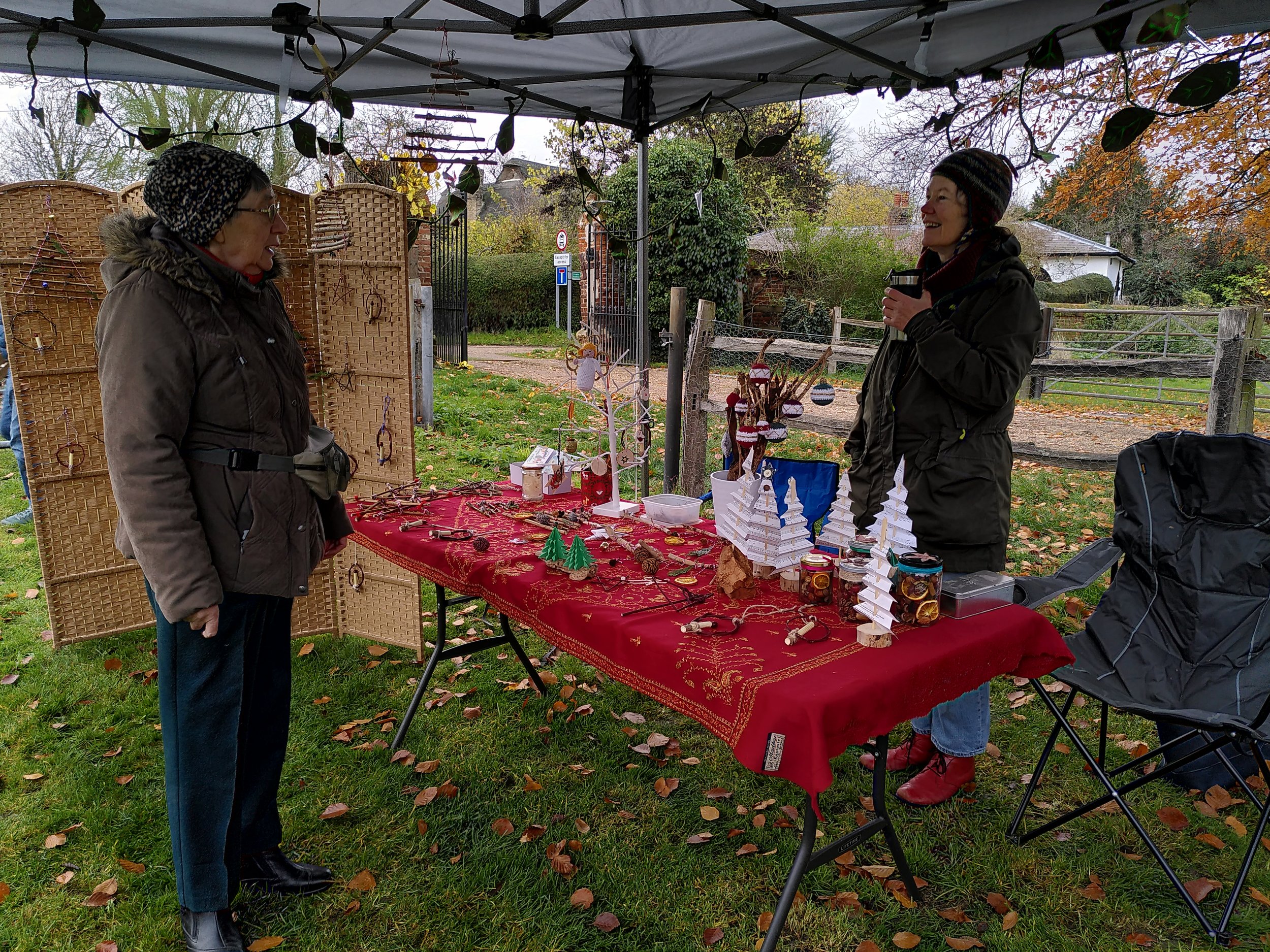
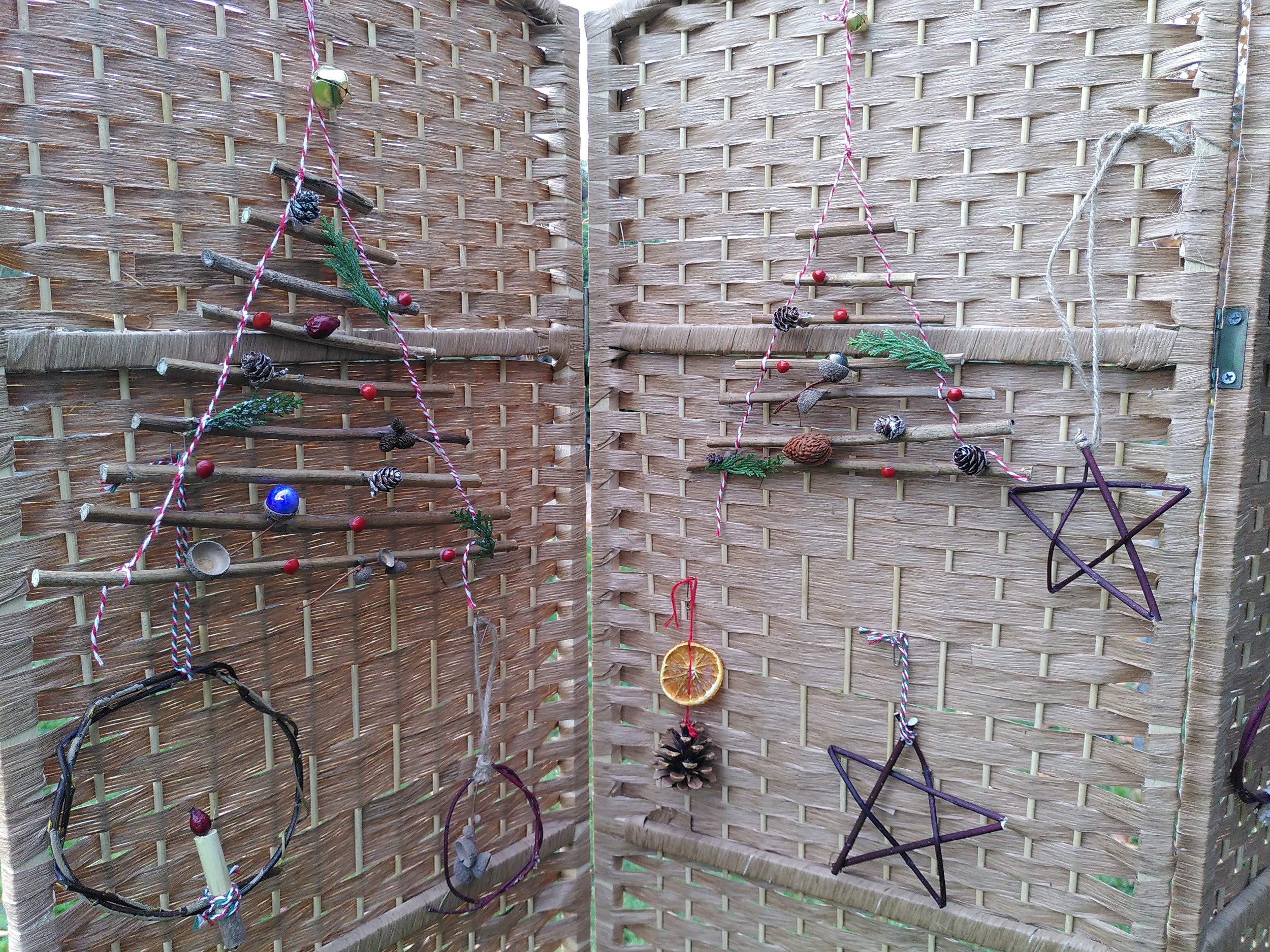
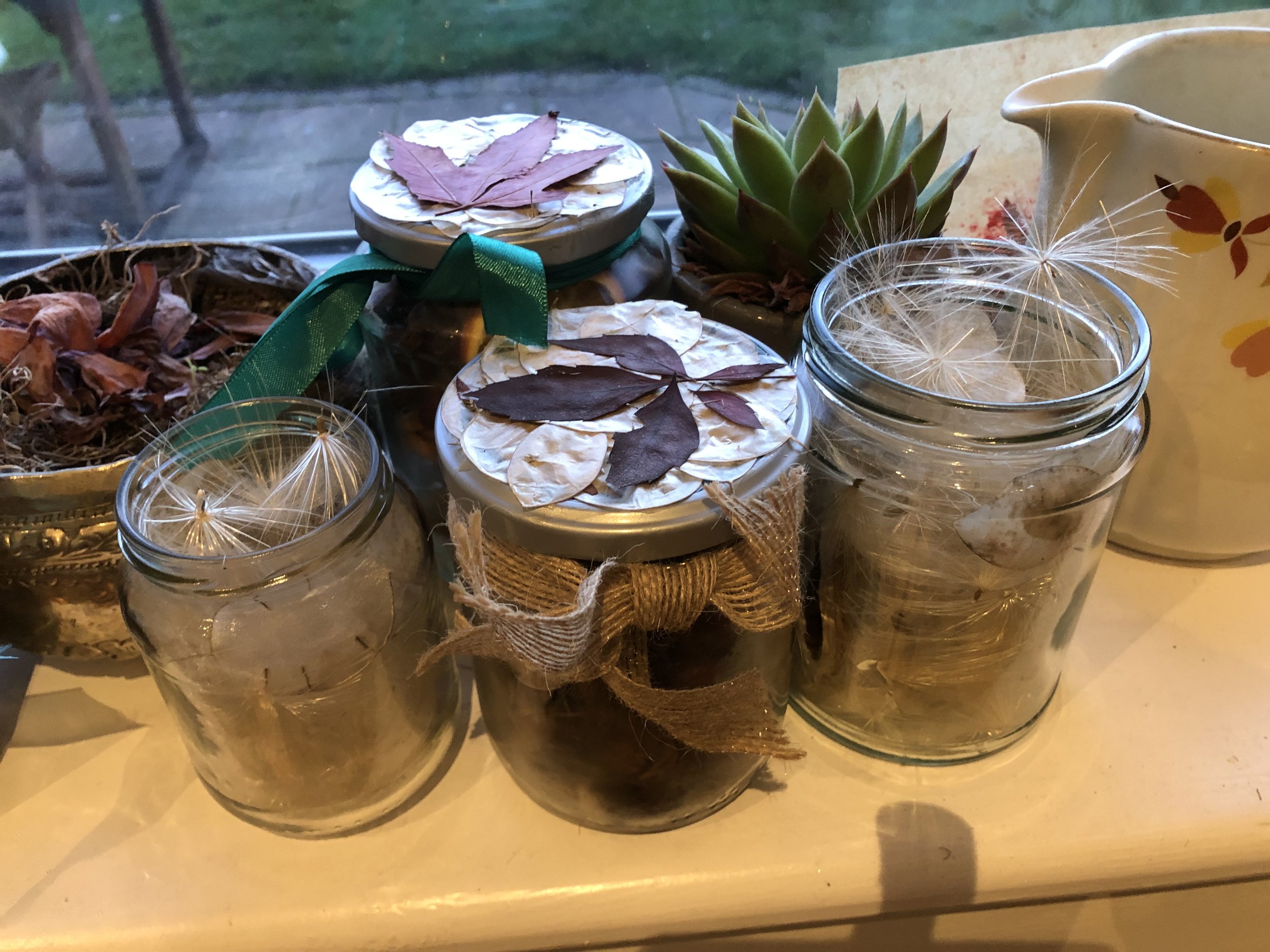
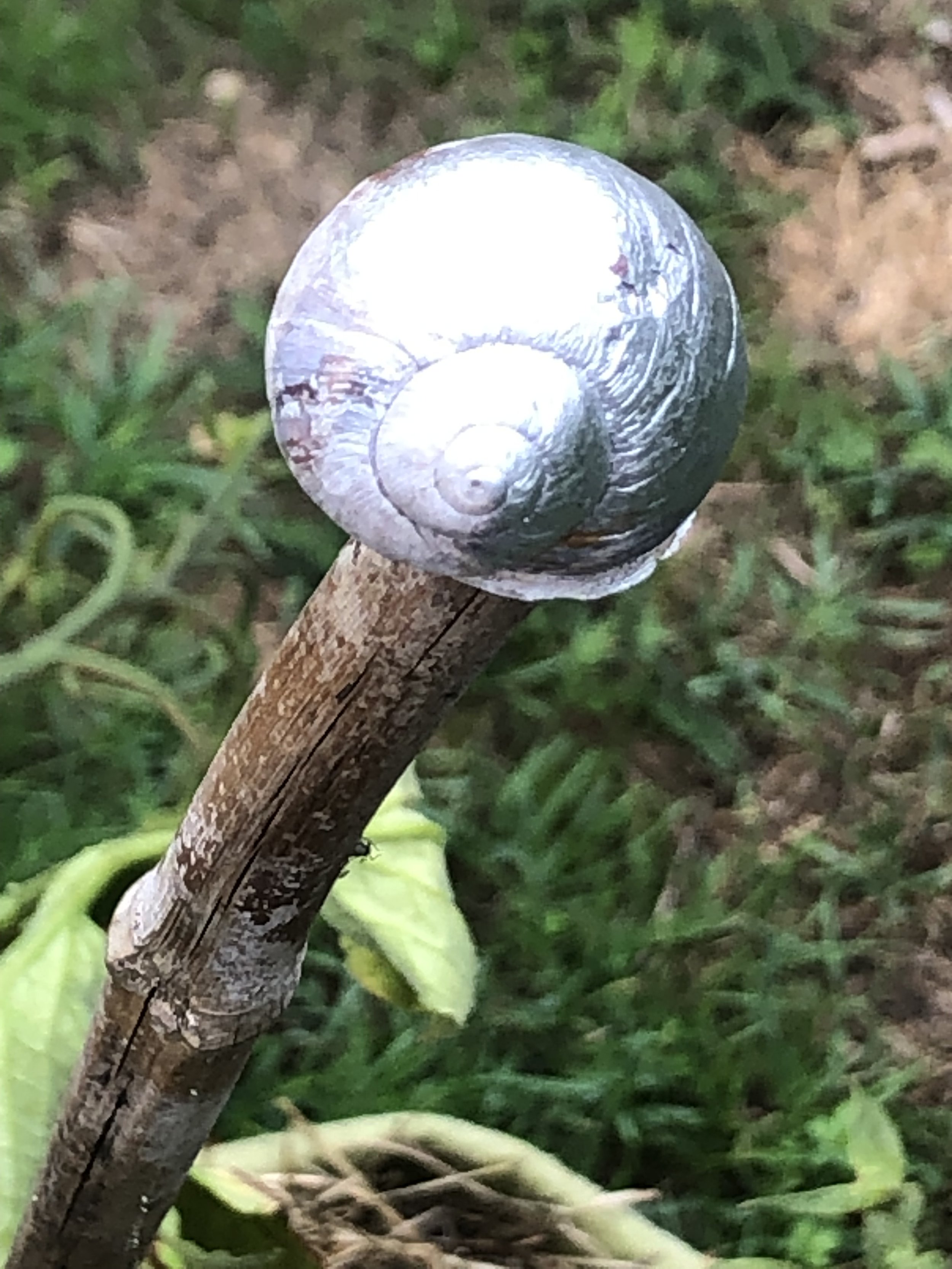
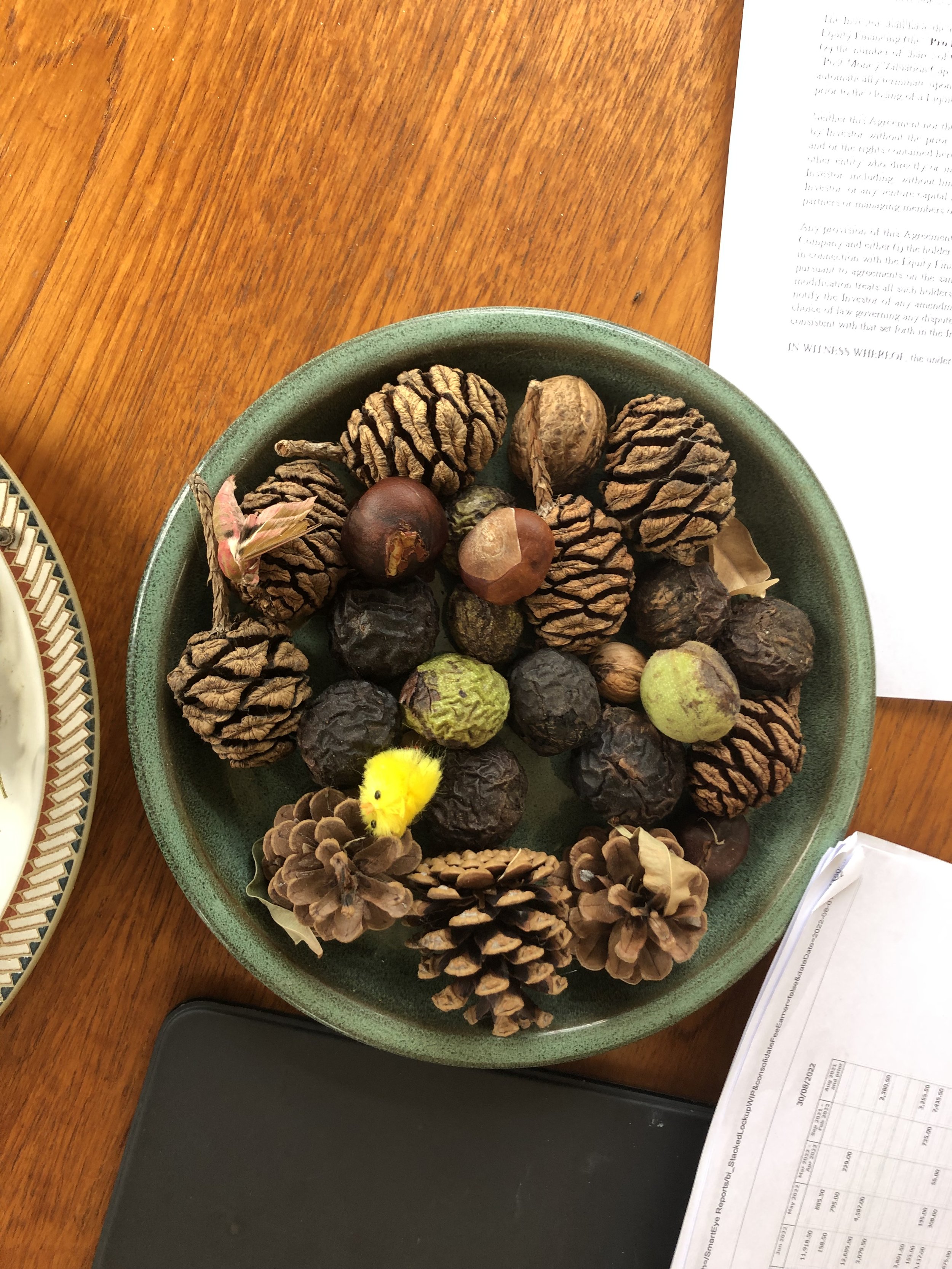
Every year Haslingfield's Methodist Church holds a popular charity Christmas Market which enables people to shop locally while supporting a wide range of charitable causes. This year we were delighted to be invited to take part. We decided to raise money for the Little Owls preschool as well as our environmental funds - but what to sell? It was already the start of autumn when we agreed to a pitch - a bit late to take up a new crafting skill! But as I walked around our beautiful local countryside, I saw so many things that inspired me. The wild hops which draped across other plants just like a Christmas festoon, and smelled so delicious. The changing leaves, each one a different colour, shape and pattern. The red berries and glossy nuts that were everywhere this year (a "mast" year for nut trees). And the cones and seed casings of all sorts, with all their shapes and texures. I didn't know what I'd do with this stuff, but I started collecting it. And the more I looked, the more I found. Perfect, empty snail shells, in every colour from lime green to rich brown. Honesty seed cases, like mother of pearl. Feathers. Crabapples. Kardoon seeds.
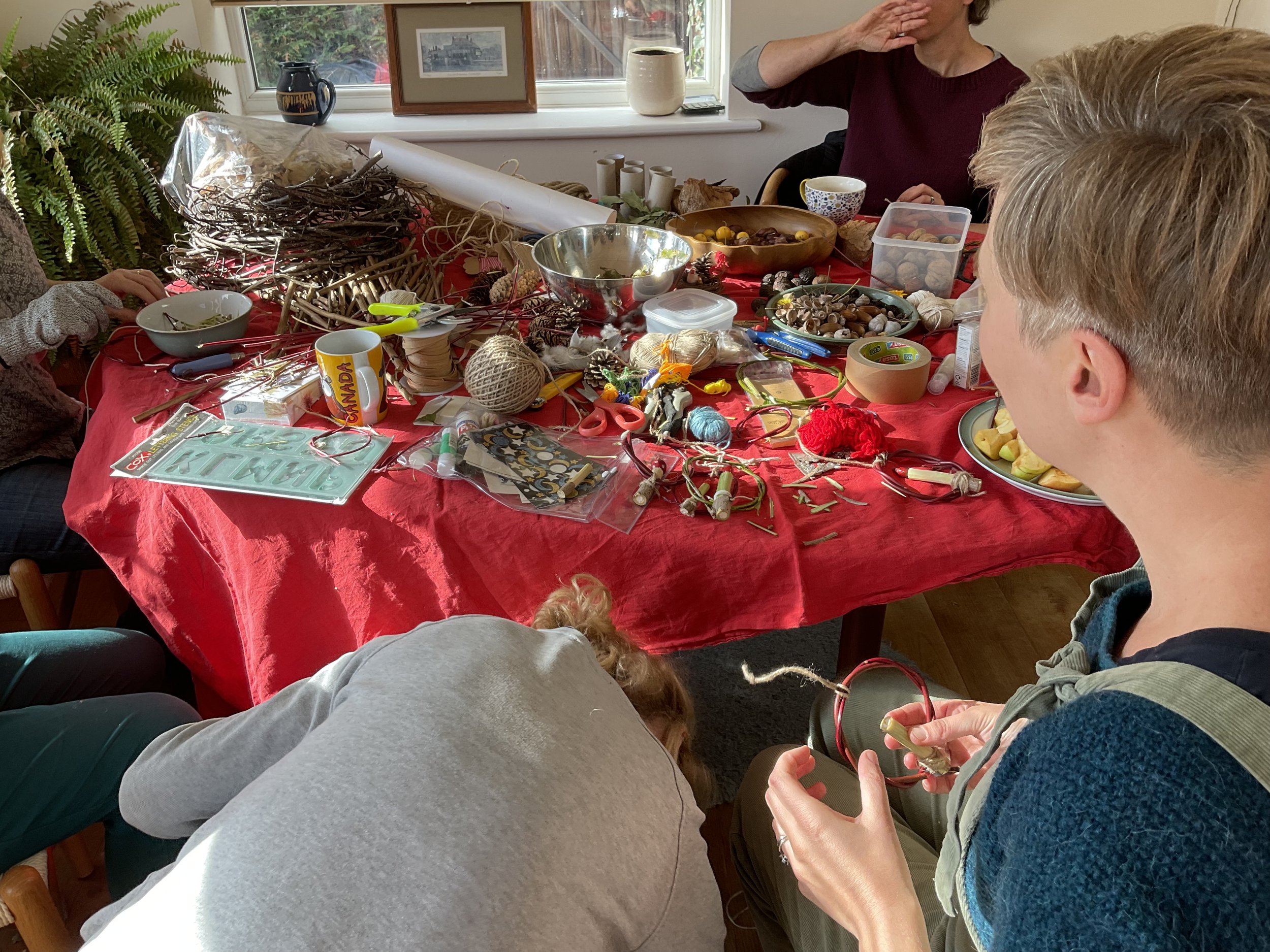
I got hold of a book on Eco Friendly Christmas Crafts. That was inspiring. But I also remembered some crafts I'd learned from our local Forest School teacher, Solveig Symons. I asked her if she would show some of us grown-ups some ideas, and she happily did so. We made Christmas candles out of elder twigs, vines and rosehips, and Christmas Stars from music paper, sticks and string. As time went on people started letting their creativity flourish, and we got more elaborate decorations, as well as jars of potpourri. We ate cake and drank tea and chatted while we worked. It was fun, and it cost almost nothing, produced nothing that can't be composted or re-used, and we raised £110 to share between Little Owls and our group.
With things tough for lots of people this winter, it's nice to know that beauty and fun with friends can still sometimes be had for free - gifts from nature!
Haslingfield Going Wild - Summer 2022
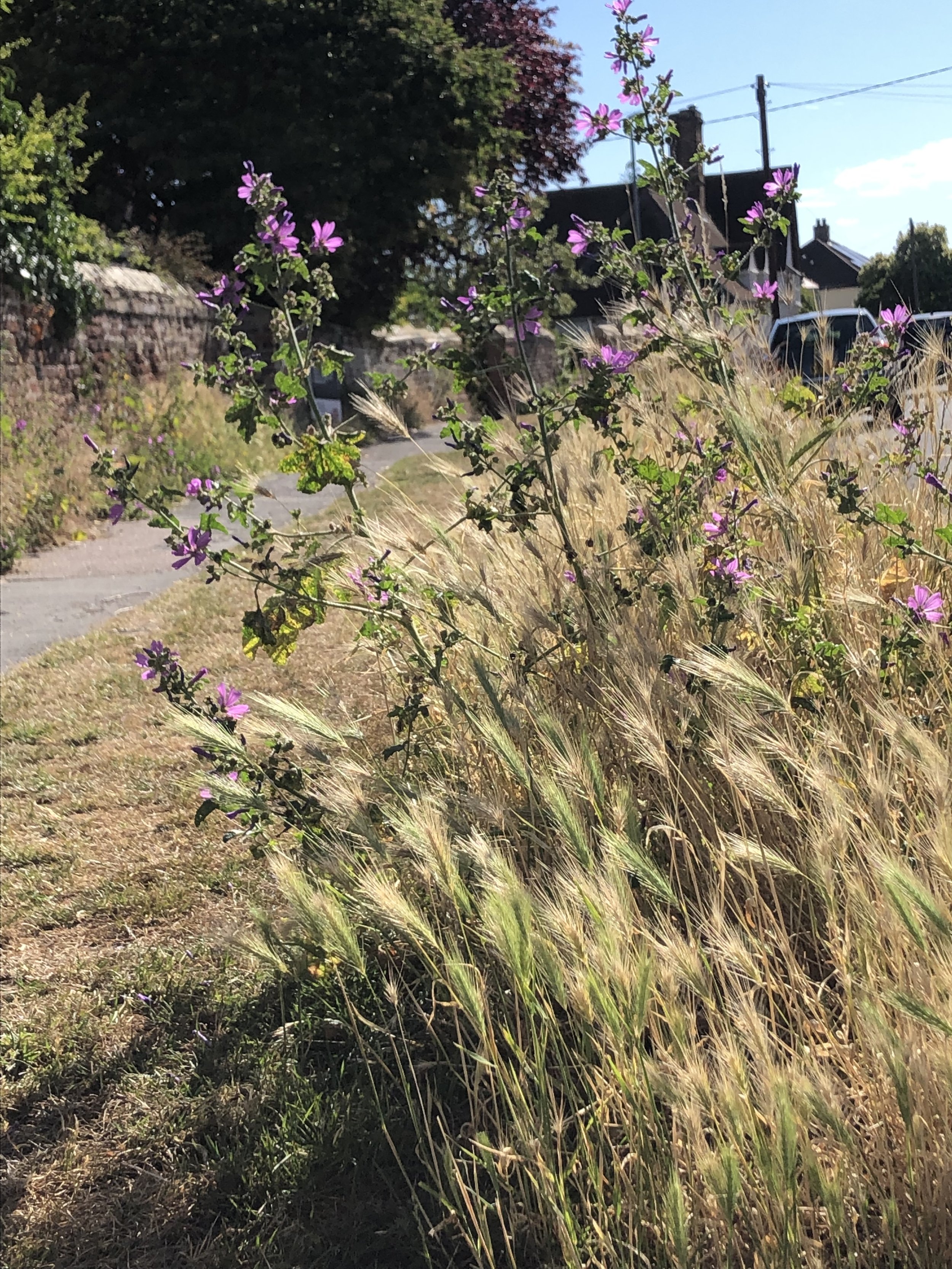
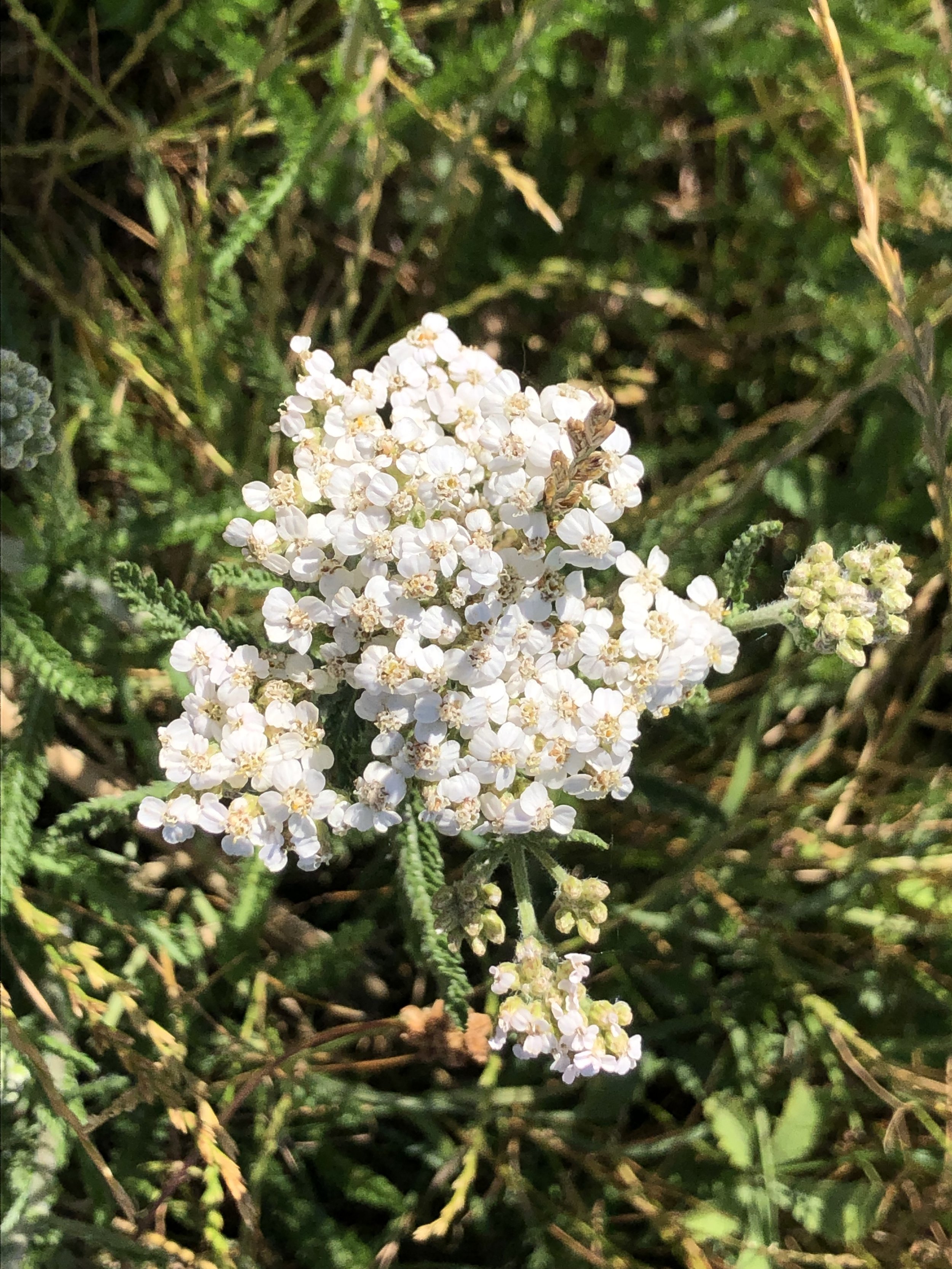
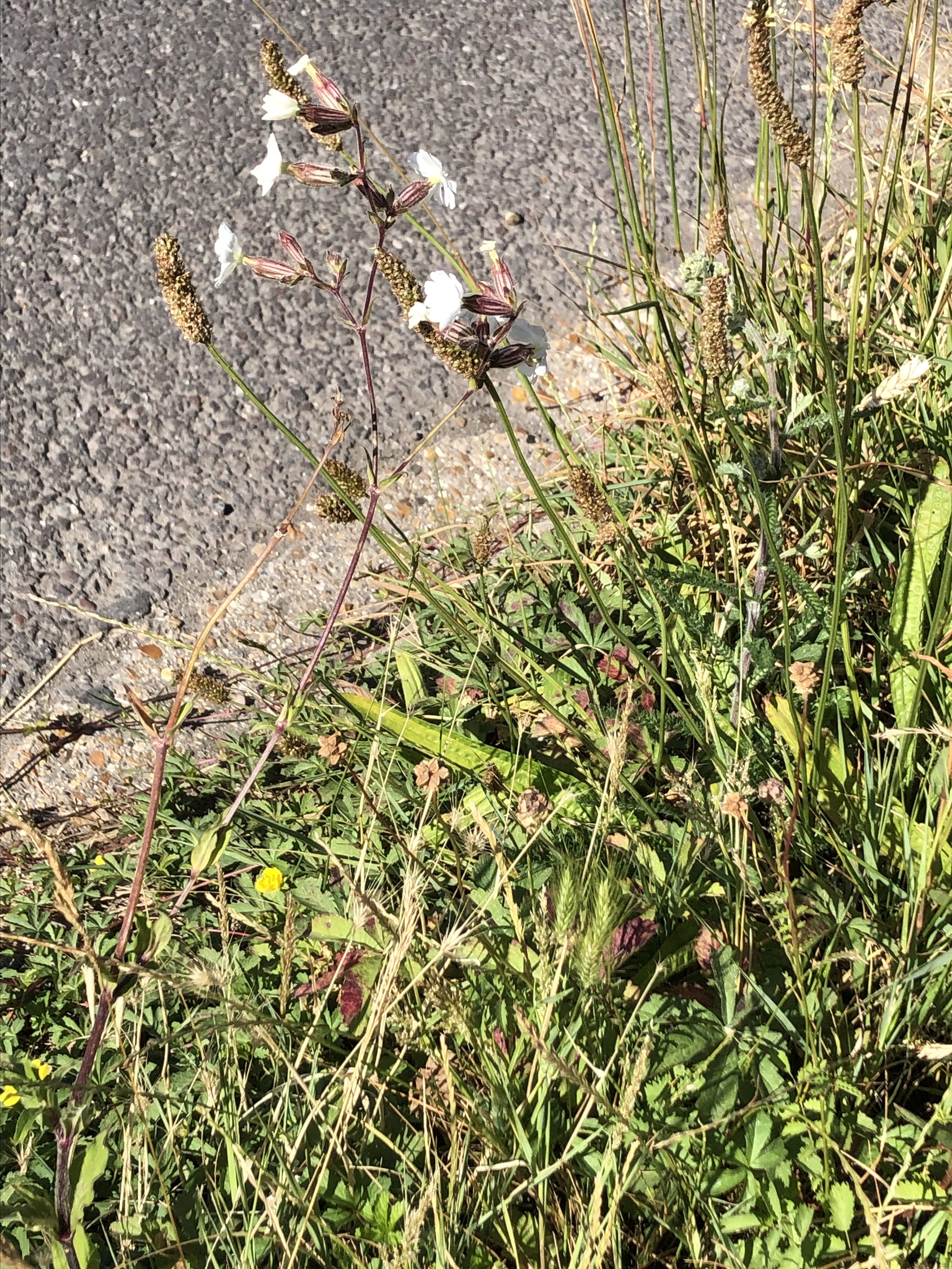
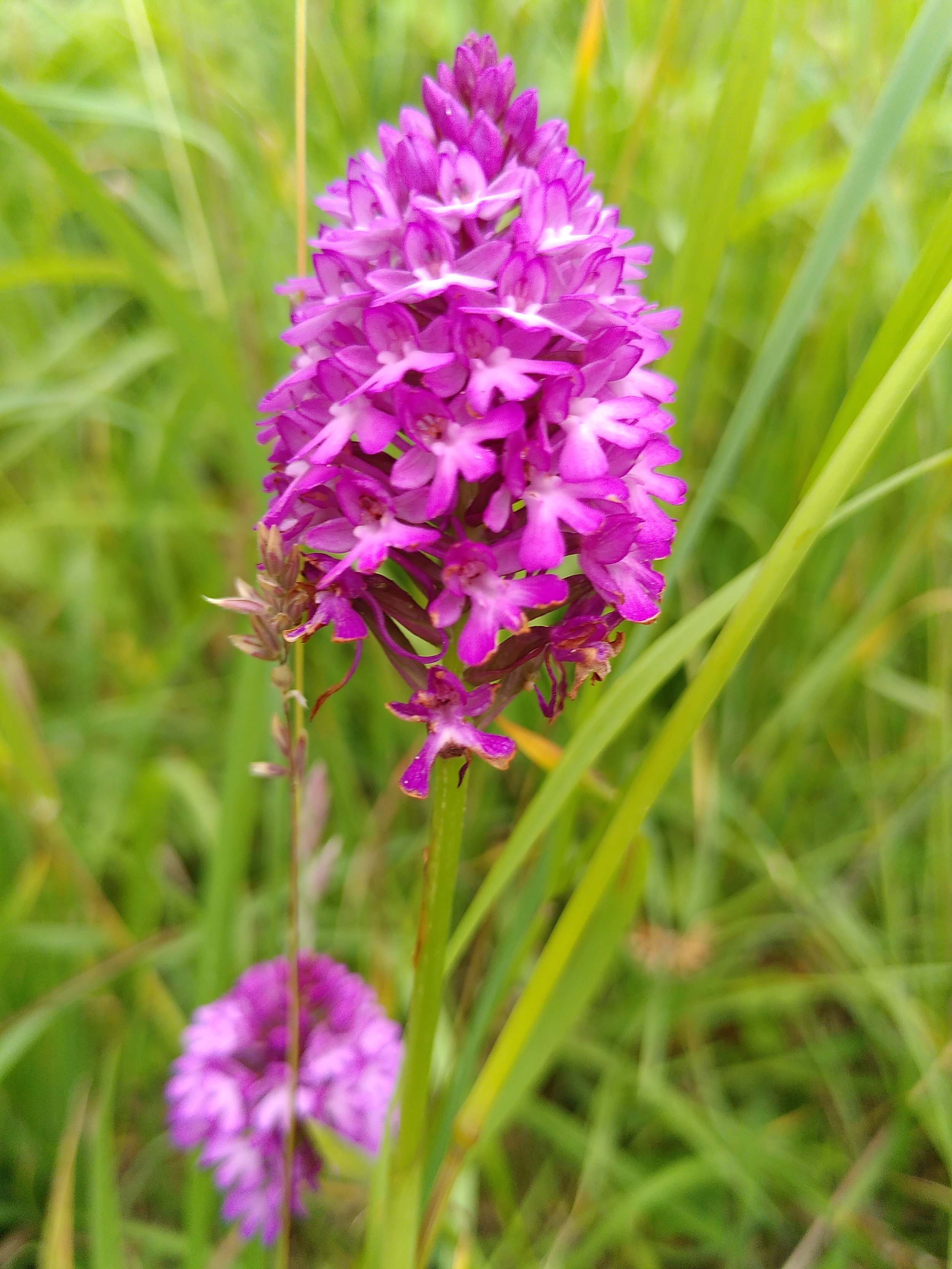
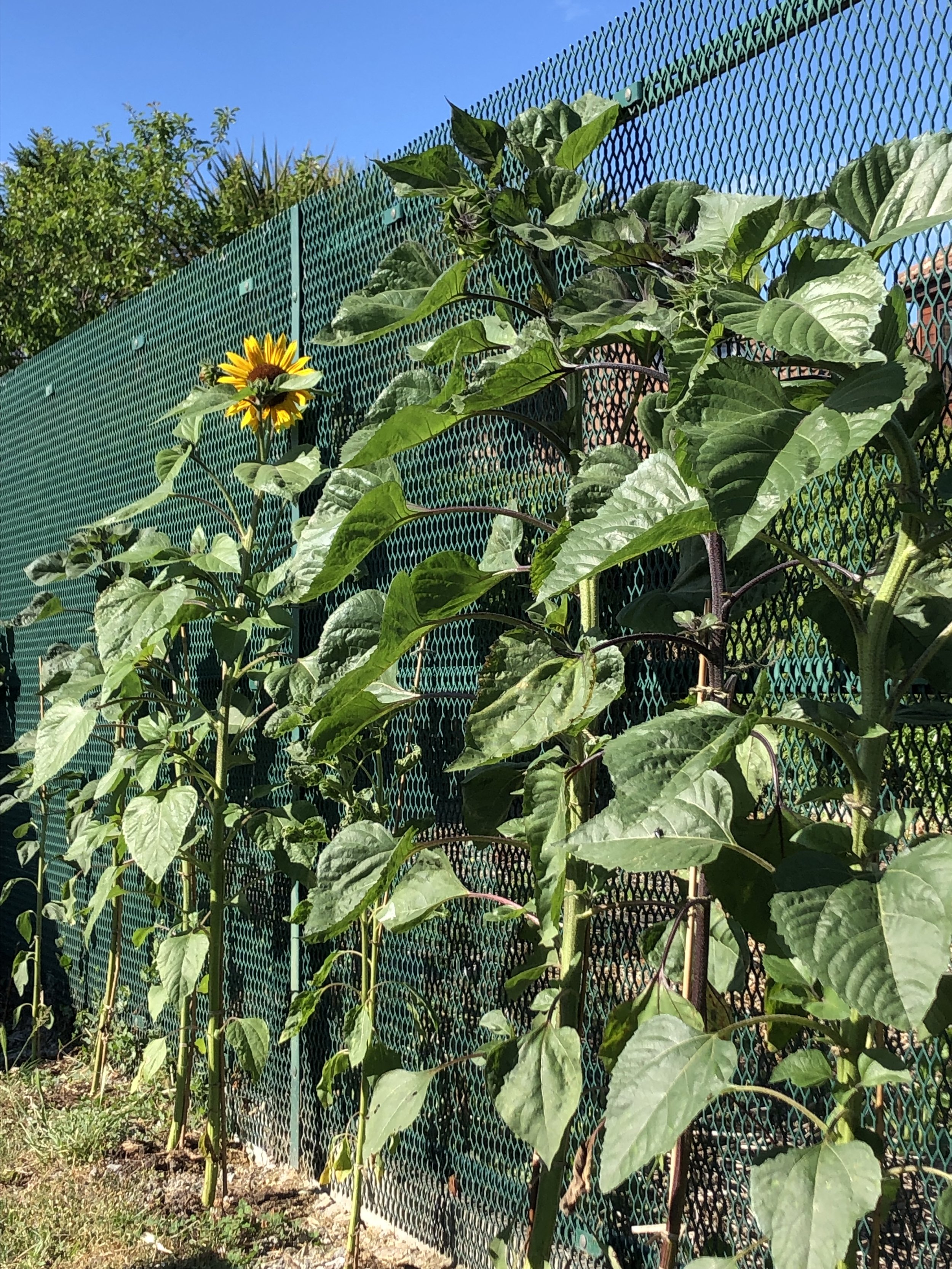
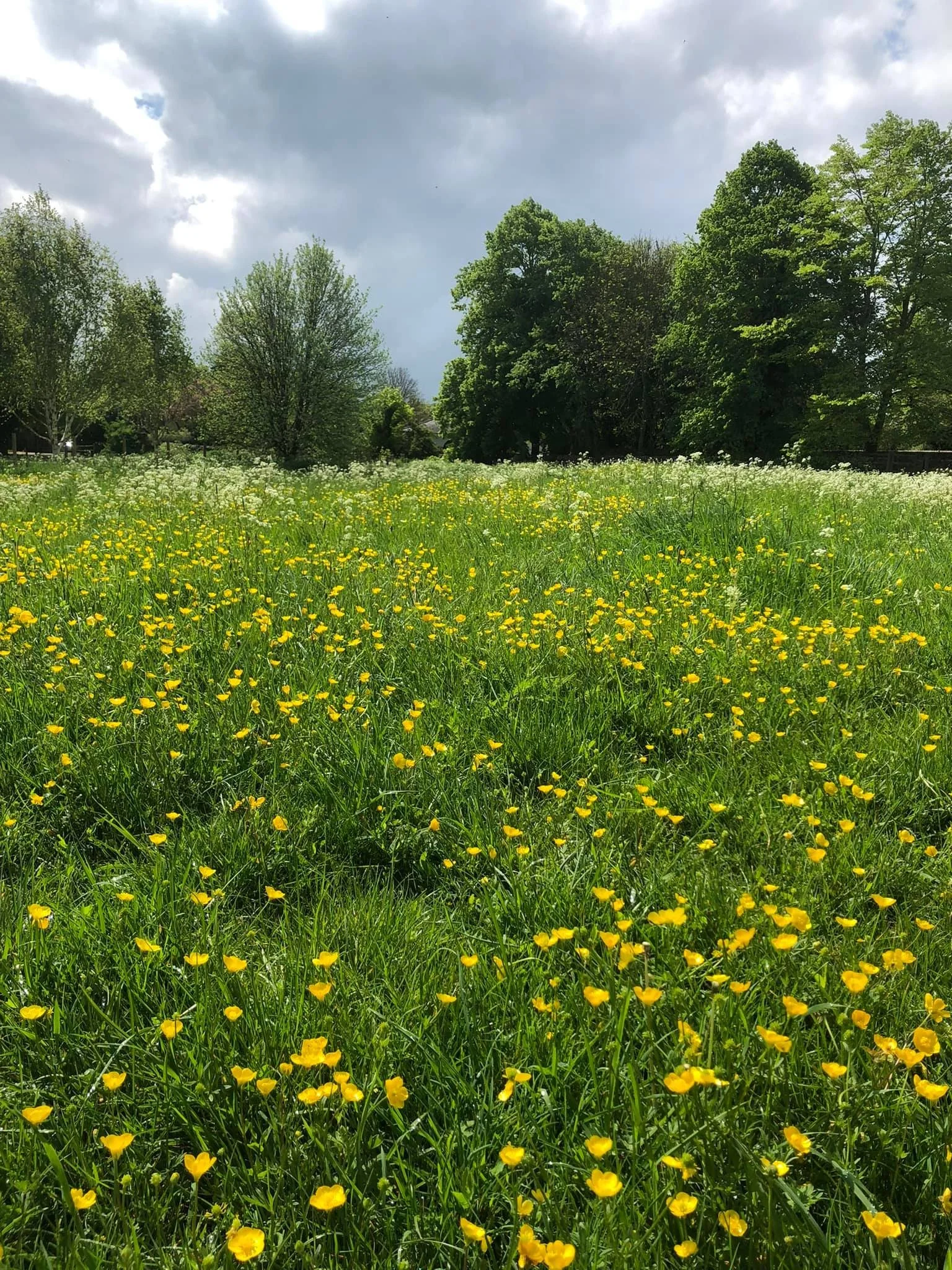
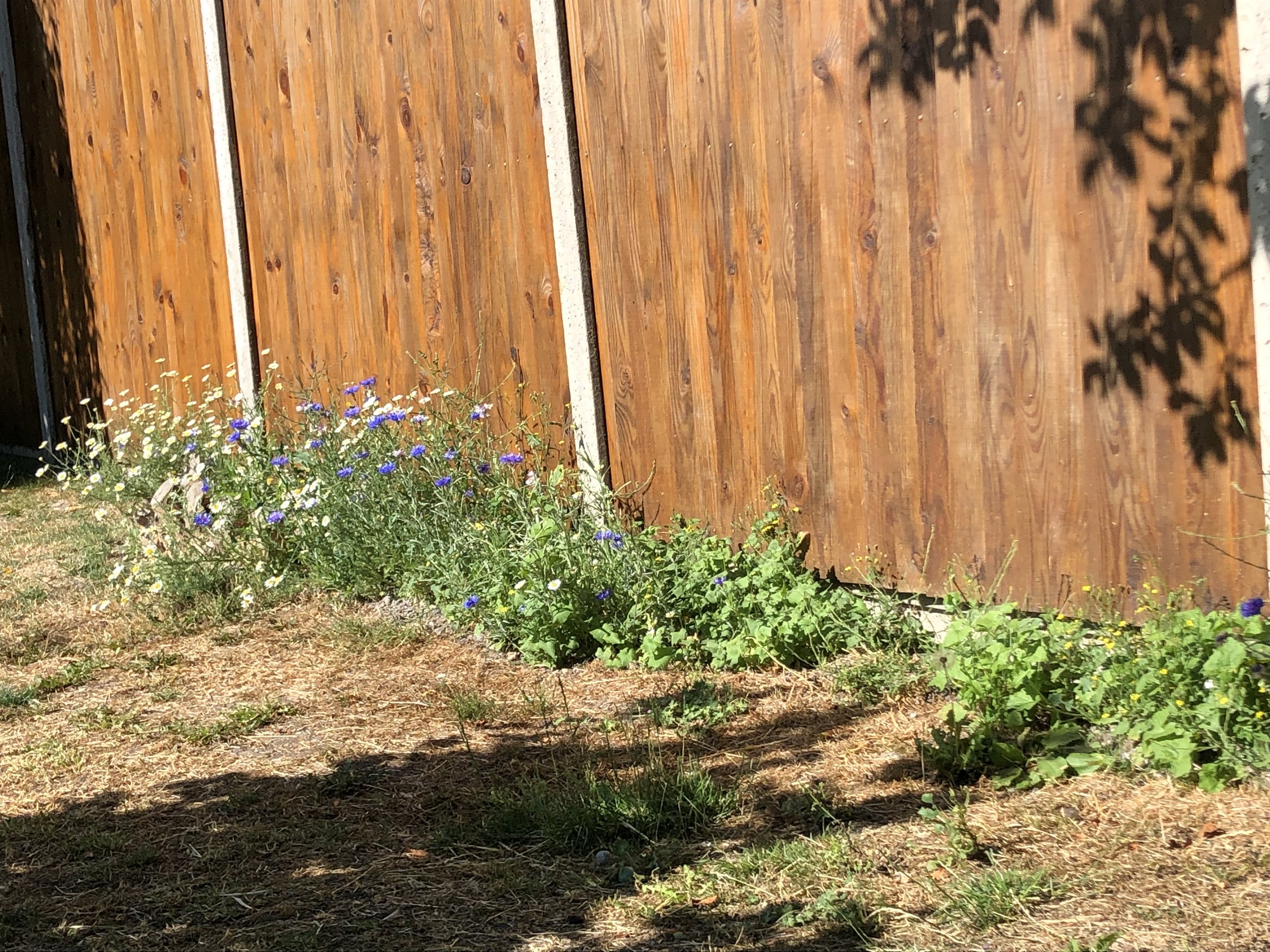
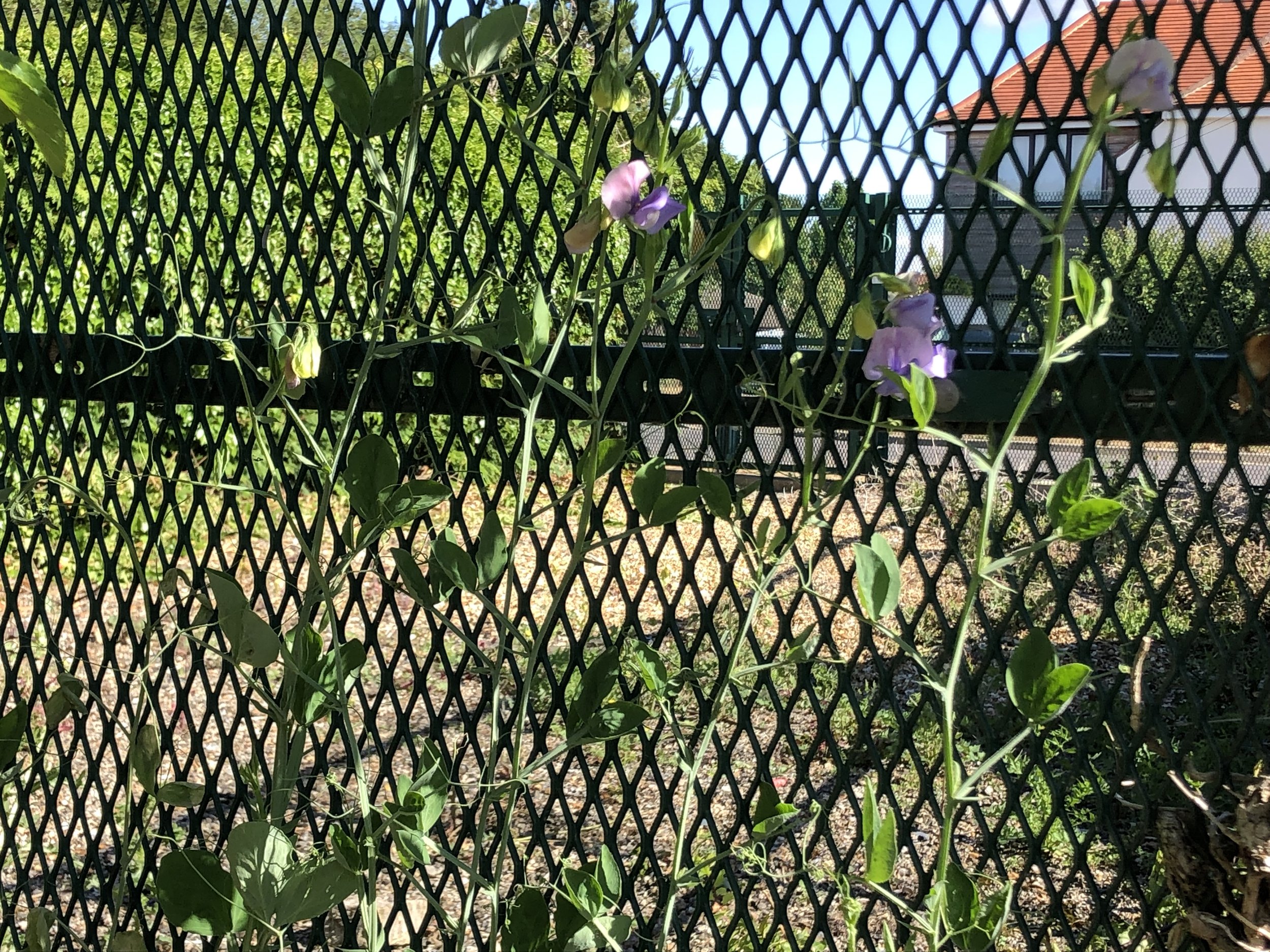
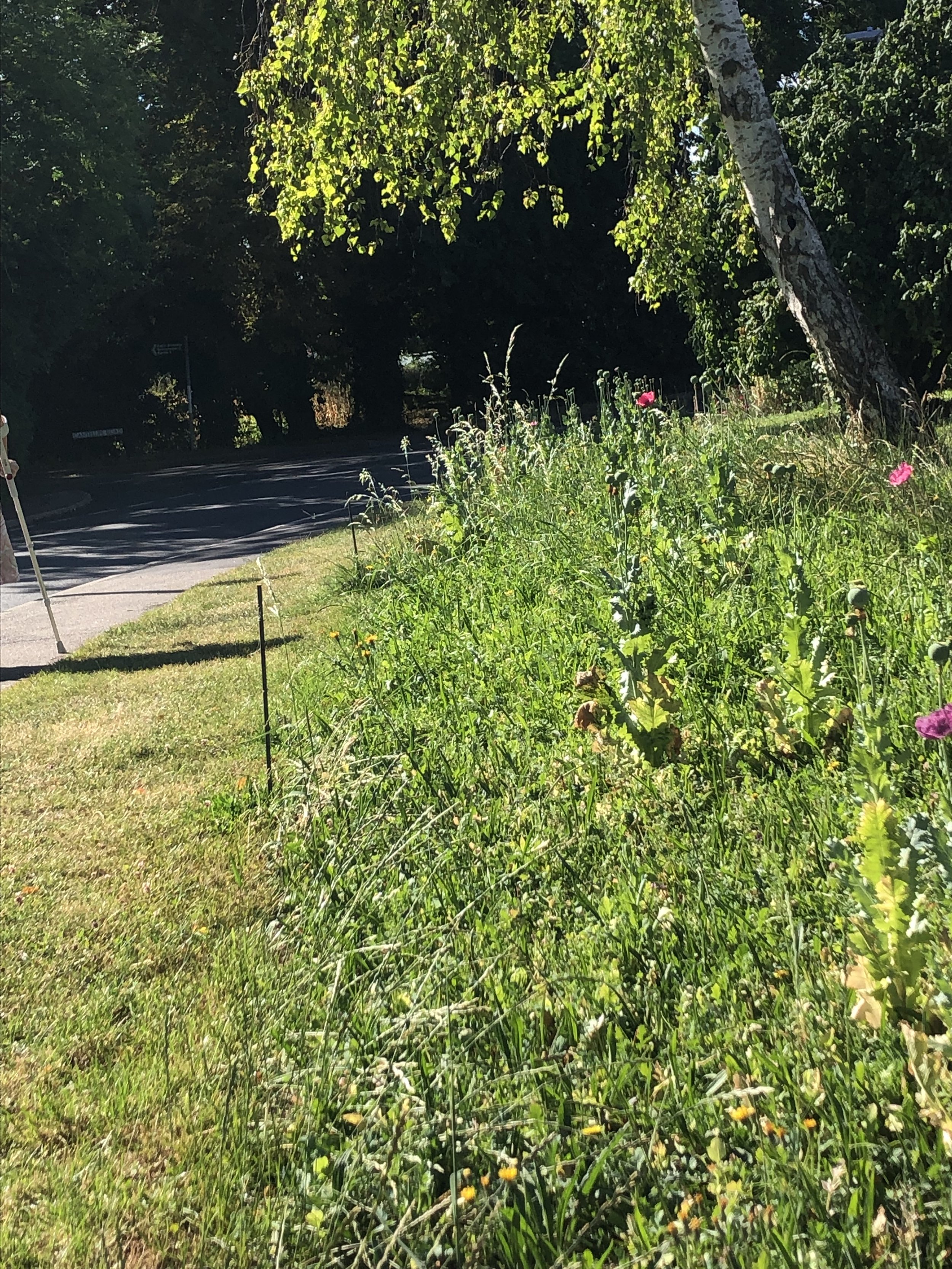
In the gardens, on the verges, and on the boundaries of our farmlands, more and more people are encouraging wildflowers and the minibeasts that feed on them. Why wildflowers? You can certainly benefit a wide variety of insects through ordinary garden plants, and there are many guides online to the best one to choose for wildlife, such as this one from the RHS. But not all garden plants benefit nature - hybrid double blooms, for example, often block insects from getting to the tasty nectar and pollen.
Our native wildflowers, on the other hand, provide many benefits for nature, while looking amazing! What’s more, many of our native wildflowers are scarce or endangered, due to the loss of grassland habitats. And it is important to go native - many minibeasts, like butterflies, solitary bees, hoverflies and other pollinators, are specialised feeders, either as caterpillars or adults. They need the flowers and plants they evolved with in order to thrive.
The easy way to encourage wildflowers is simply to mow less - once or twice a year if you can get away with it - and remove the cuttings for compost. This slowly removes nutrients from the soil, allowing the wildflowers to compete with coarse grasses that prefer richer soils. Mow paths or create interestingly shaped patches of unmown meadow to make it look intentional and pretty. For quicker results, seeds or plugs can be planted. The Eco Group can offer help if people know of a public area they'd like to see improved.
Click through the gallery above to see some examples of our recovering local biodiversity.
Notes on the examples shown
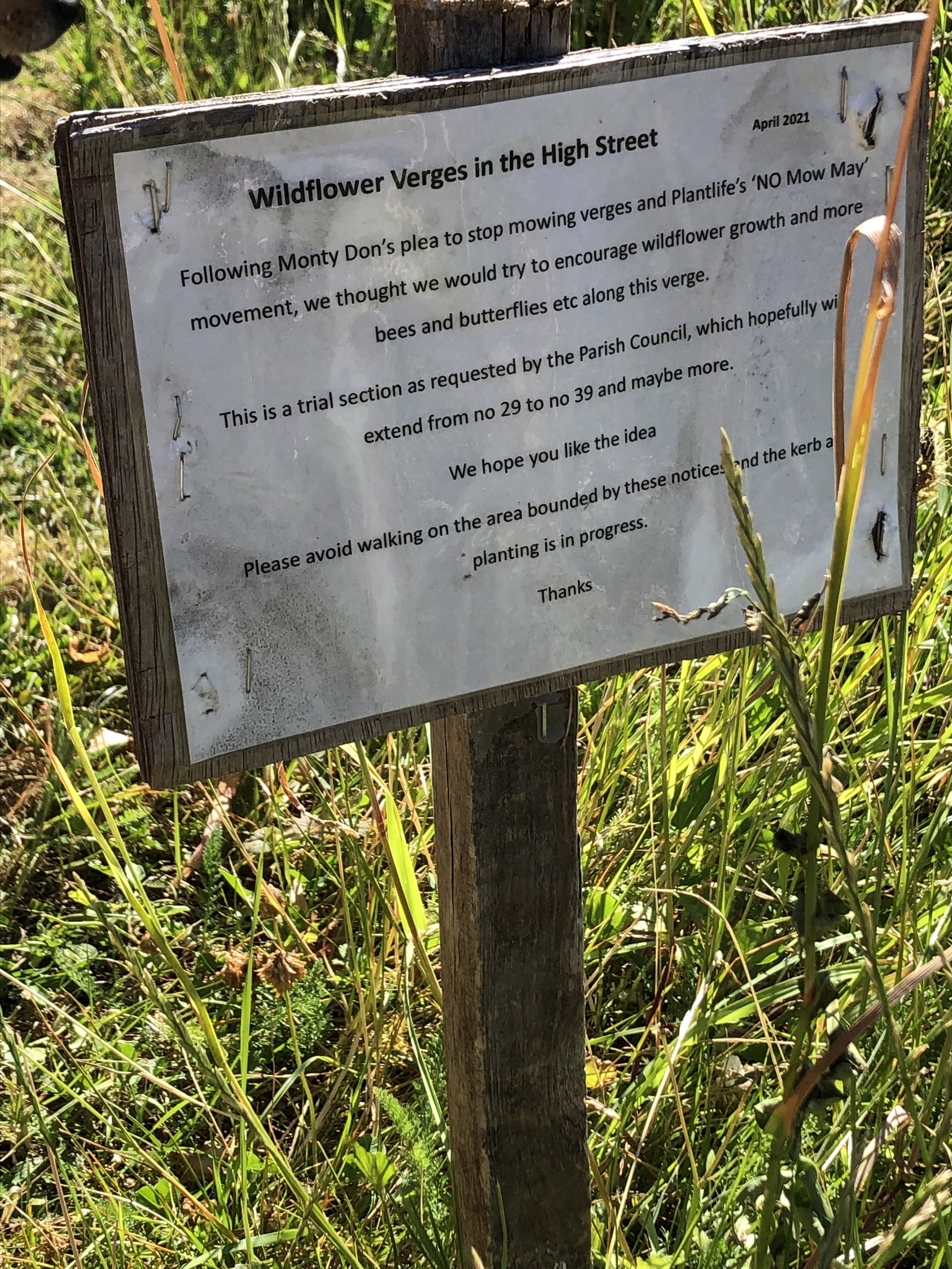
1) High Street Verge - A small group of local residents planted wildlfower plugs on the verge and have been leaving the street-side half unmown. Observed flowers include mallow, knapweed, hawkbit, dandelion, plantain, wild carrot (also known as Queen Anne's Lace), white campion, and forget me not. The longer grass also provides habitat and the grass seed is food for birds and small mammals.
2) Pyramidal Orchid and Peacock Butterfly - Both of these were observed on a walk around the fields between Harston and Haslingfield - first time I've seen a Pyramidal Orchid there. The Peacock Butterfly caterpillar is one of several which primarily feed on nettle.
3) Lilac Close - a resident family, assisted by members of the Eco Group, has planted wildlfowers from seed as well as sunflowers, sweetpeas, foxgloves, sedum and creeping thyme against the fences of this small public green near the bus shelter.
4) College Crescent - residents cleared a large rectangle and planted wildlfower seed. On July 2nd, I observed several oriental poppies in full bloom (when they are a favourite of pollinators like bumblebees who stuff the pockets on their hind legs with the silvery/fawn pollen) and many more flowers on the way. July 11 update - lots of red poppies now blooming! If you are involved with this initiative do get in touch - the eco group would be happy to help!
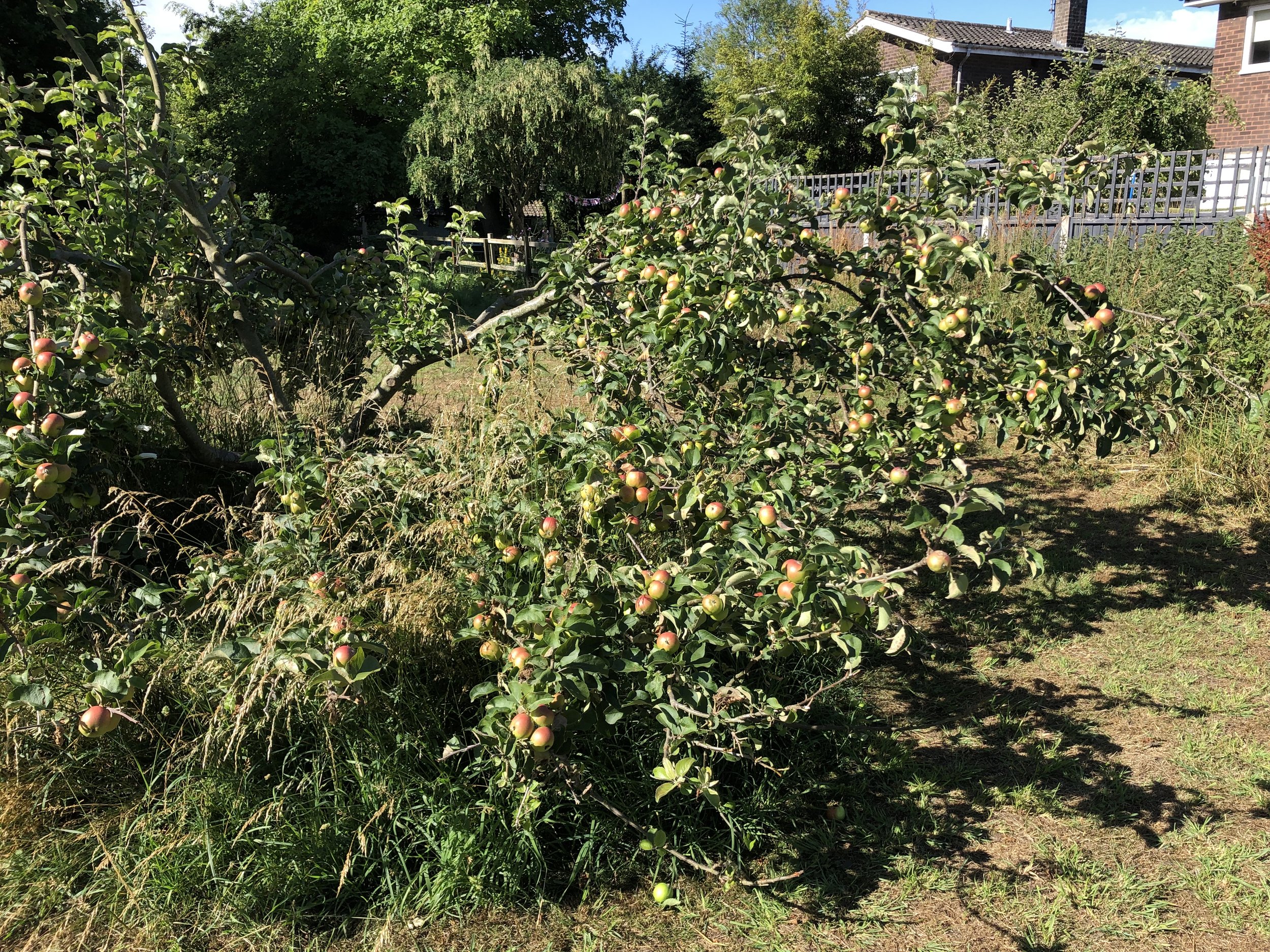
5) Wellhouse Meadow and Orchard - the eco group has been working with the parish council to mow less and encourage more wild flowers. At this time of year you can see knapweed, meadow cranesbill, meadow bedstraw, a few oxeye daisies and red and white clover. It's a tricky problem, however, as the soil is very fertile so the coarse grass easily swamps the flowers, especially in summer. Nettle and bindweed are also threatening to spread throughout, and as we are unwilling to resort to chemical sprays, we will have to mow some areas more frequently if these plants get too out of control. Both are good for pollinators/insect though, with whole ecocystems which depend upon nettle! And so far everyone loves the new "rides" or paths, through the long grass. Especially beautiful at sunrise and sunset!
Do you have something to share about increasing biodiversity in Haslingfield or Harlton? Please get in touch! Write to HnHeco@gmail.com or post on our Wild Haslingfield and Harlton Facebook Page.
We welcome submissions from group members and others but reserve the right to refuse or edit them. Unless otherwise stated, blogs are by Michelle! Write to HnHeco@gmail.com if you have a blog idea or proposal.
NB: some posts were migrated here from our previous site (hence two dates!)