
A Perpetual State of Rage
How a book about a deer started me down a path of baffled anger…and why I think many people today are feeling the same way.

by JM Golder
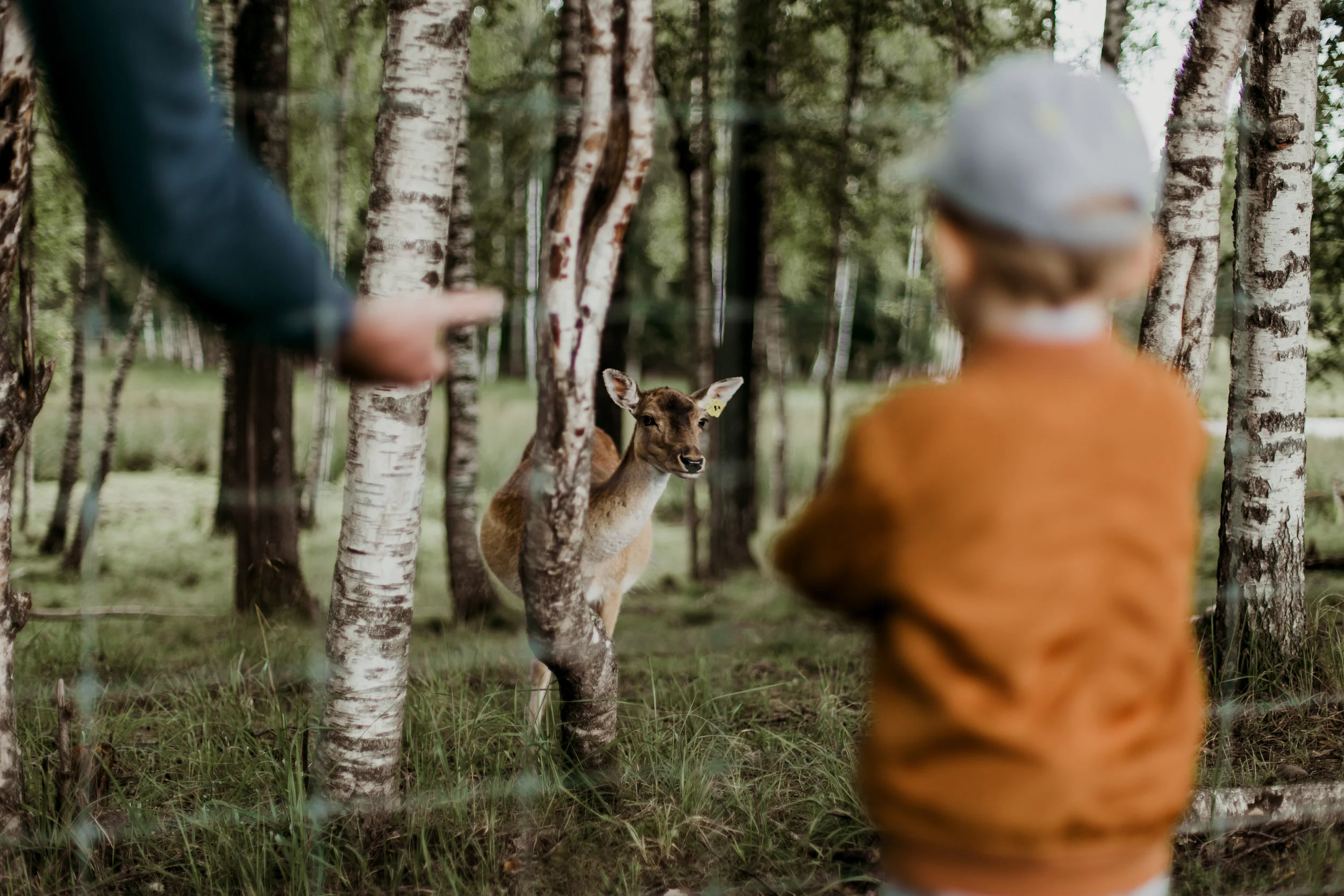
When I was eleven years old, I read Marjorie Kinnan Rawlings' Pulitzer Prize-winning novel, The Yearling. A best seller in 1938, it tells the story of an American frontier family, living on the edge between wilderness and civilisation. The hero, a boy named Jody, adopts an orphaned fawn, which, in its grace and gentleness, becomes his source of inspiration in a harsh and impoverished life. Later, the deer eats the family's corn crop and Jody's beloved and beleaguered father forces him to kill it. Its death is brutal and bloody, and it stood for the loss of something bigger which I didn't quite understand, and it broke my heart.
That's what started my state of rage. What started yours?
If you're reading this, I'm sure you have one. For most of my life I felt alone in my angry ambiguity toward humanity. I grew up in a middle-class suburb of LA County in the 1970's. I met people whose connection to nature was their horses, chewing dry hay in dusty pens, or their dogs, going mad in their lonely backyards. People who, like us, spent a week each year visiting one of America's national or state parks, museums to wildness and poignant symbols of exactly that bigger thing which The Yearling taught me to mourn. Why wasn’t it all preserved like this? Why did it take a mountain view for us to care for the natural world?
Back home, I was a helpless witness as field after peaceful field, where I planted apricot kernels, built hideouts, or searched for grasshoppers, turned into a housing tract, strip mall or parking lot. As I became a young woman, I raged against my boyfriend and his pals, who drove us to the beach, or up to the top of Topanga Canyon with its sparkling view of the San Fernando valley, and left their beer bottles and half smoked cigarettes as souveneirs.
But I never met other people who felt angry about all this. I'm sure there were others. But outside of books, I didn't meet them.
Now, though, everyone is angry, and they are happy to share. Almost every day we hear about a new precious thing we are losing, may lose, or have already lost, and we feel helpless to do anything about it other than vent our frustration on loved ones, on social media, in blogs or even on the streets. We might feel we’re losing progress toward equality, on the one hand, or security and stability, on the other. We might have lost our belief in a future for our children, or our right to make decisions about our own bodies. I’ve lost my respect for national institutions, like our university in Cambridge, which refuses to divest from fossil fuels despite overwhelming scientific consensus and passionate student advocacy [2022 edit - it has now, but still maintains its links to fossil fuel corporations].
Most worrying of all, at least for the future of civilization, I think people have lost their belief in the goodness of their own societies. How can we be good, how can we be enlightened, if our society is destroying the planet? And if we start to believe we are not good, how bad will we become?
Anger can be a horrible and destructive force. When we let go and lash out at those around us we more often than not leave irreparable devastation in our wake. But it can also be lifesaving. When my sister was attacked in an underground car park, her instant reaction was rage. She whacked the perpetrator with her handbag, shouting "How dare you! How dare you!" He ran, and hopefully thought twice before attacking another "helpless" female. I've also never forgotten some advice from a writing workshop with playwright Jaki McCarrick. "Write about what makes you angry," she said. "It's a great motivator."
So I'm back to that pretty deer. Symbol of all that is wild, and other, and from the precarious edges. Symbol of the way humanity sets itself – with deadly force - against nature, yet mourns its loss as we mourn our kin and fellow travellers. Why have we done it? Why do we keep doing it? How do we stop?
I'm mad as hell, and this time - for once, for all, for god’s sake - I don't want the deer to die.

What are YOU giving up?
I don’t think of myself as any kind of hero. If real life was Lord of the Rings I’d definitely be a home-loving hobbit. But Gandalf keeps knocking at all our doors. It seems to be up to us to save the whole frickin’ planet.
by Michelle Golder
Yes, you. You may have noticed; the world is facing an existential threat called climate change. It's the dragons and the white walkers together from Game of Thrones. It's the death star zeroing in on our planet. It's Sauron, reborn, with ten thousand benighted Saruman's (Sarumen?) carrying out his apocalyptic agenda. This is real, it's happening now, and you, since you're reading this, are probably a hobbit (the wizards are busy magicking up new renewable technologies and trying to re-invent nuclear). That is, you're a mostly harmless and well-intentioned person, but you feel small and helpless in the face of a scary and confusing problem. You don't want to be a hero, you feel ill-equipped and unready, and if you're honest you've been trying not to think about it, but you're starting to realise you really don't have a choice. It was your fate to be around at this crisis point in human history. As in all the best stories, the path has chosen you. Your job is to travel it with a good heart.
Thousands of people are already trying, in lots of different ways. To give one small example, I belong to a group called Zero Waste Heroes, set up in the UK by Rachelle Strauss. Their goal is to aim for a zero-waste life, and some determined souls take it as far as “family cloth” toilet hygiene (yay them?)
Many of the members though, including me, are nowhere near that level of zero-wastiness. Still, everyone in the group has made steps to reduce their consumption of the energy and goods (because unless it grew in your back garden it cost fossil energy to make) which are destroying our world. I've given up flying, and significantly lessened my use of single-use plastic, factory-produced foods, meat and dairy, cleaning stuff and hygiene products, like fabric softener, hair conditioner and anti-perspirant (who knew? I never needed them). I switched to a green energy supplier, guard the thermostat beadily, wash clothes in lower temps, and take fewer and shorter showers.
I'm not looking for kudos. Through sheer luck, I was born into one of the two regions (USA and Europe) which have contributed almost 50% of the atmospheric carbon currently blanketing the planet. If you’re now saying, wait, China, remember that carbon dioxide lasts at least a hundred years in the atmosphere. Though China is currently the biggest single emitter, due to its large population and rapid industrialisation, we started spewing fossil fuels a long time ago. Worse, the US still emits on average more per person than almost any other country, thanks to big houses, big cars, big office spaces, and an addiction to factory produced foods including way too much meat.
Given what we’re up against, my little sacrifices are clearly not enough. Which is why I felt so peculiarly sad when I saw the example of this young couple, with their impressively meagre 30 days of waste.

Marcel and Blanca with all the waste they produced in 30 days. Picture used with their permission.
They tell me this wasn’t a sacrifice, it’s their normal routine, and saves them time and money, and I know that’s true, because anti-perspirant is freaking expensive. But there are other worlds of heroism they and their little piles represent. Worlds of beautiful, young faces, radiating kindness and resignation, who don’t know if they should have children, even if they want to. Who devote their free time, as these two do, to organising for systemic change. Whose "hope" for the future is that there is one. What more are they going to have to give up, years after my generation is gone? That’s what makes me sad.
Sigh.
But, the road goes on, and we were talking about you. I'll be honest, the title of this post is clickbait, because I don't really care what you're giving up right now. I’m sure you are doing your bit, but the truth is, it's what you and I are prepared to support in the near future that's really going to make a difference. Groups like the Extinction Rebellion and the UK Green Party and America's Green New Deal and many others around the world are gathering popular support and demanding political action and very soon, I hope, you and I are going to be asked a big question. That question is going to involve, in some form or another, a complete revolution of our economic system. It will involve a vote. It may involve changing your job or the way you do business. It will almost certainly cost you money and time. It will probably require a lot of additional and unfamiliar work – including any or all of: local food production; participating in community energy schemes; changing how we travel; or becoming involved in new forms of public decision making.
It will also demand a complete rethink of our notions of fairness and justice, both within and across nations. Because if the better off among us try to shrug away our own share of the burden, know what others will say to that question? No.
And it's essential that we all say yes. Yes to a new, circular, regenerative economic system, where everything produced can be repaired or completely recycled. Yes to a massive, fair, global investment in climate change mitigation and preparedness, include funding research into all the technologies and regenerative systems that can help us. Yes to valuing the natural world as it should be valued - as the source of all life, the weaver of the web we live in and on, our father and mother.
The writer Mac Macartney recently visited Cambridge to talk about his book The Children's Fire, based upon an indigenous peoples' concept that decision making should focus on protecting the children to the seventh generation. "A civilization is doomed," Mac said, "when it stops caring about its children." If we say no to the changes our world needs, that’s just what we are doing. Telling our children, and our children’s children, that we just don’t care.
I can't tell you the shape of the future. We're all in the process of making it. My personal (thanks again, Tolkien) dream is something between the Shire and Rivendell – a world where birds, bugs, children and animals, wildflower meadows and mushroom scented forests, all co-exist with beautiful green cities where art and positive (like magic!) technology flourish. To get there, I believe, we have to pass through a difficult and painful transition, like the one women go through when giving birth. But I remember how I felt when I'd passed through that transition and held my only child in my arms. I'd have done anything to protect him. So I’ll tell you what I’m not giving up. Hope.
You?
What to Make of a Diminished Thing
I’m writing this because I see others that, for one reason or another are going through the stage of wondering what to make of a diminished thing. Is the West declining? Where did enlightenment go? What will happen to the earth? And what is happening to me?

I often love a poem without understanding what it means. The sound, or the images, stick in my head, and sometimes, years after I’ve read it, it comes back to me with a jolt of enlightenment. So that’s what it meant. How true. How important.
One of these poems is Robert Frost’s The Oven Bird. The lines that stuck with me are these:
The question that he frames in all but words
Is what to make of a diminished thing.
I read it as a teenager. A diminished thing? What is that? A thing is what it is, isn’t it? And if it isn’t, if it’s less, than why make anything of it? Life is about expansion, not diminishment.
In late 2015, at the age of 53, I started to notice I was aging. I’d seen I had wrinkles before, but that wasn’t such a thing. I was never amongst the blessed few with faces molded by the gods, so I knew early that looks are not to be depended upon. Your capital, if you’re to have any, must lie in other areas – becoming caring, or a good listener, interesting, or well-informed, inspiring, funny, talented or rich. I’d invested what I could in several of those (I’m not rich).
But this was something else. I was fit, I felt healthy, but I couldn’t churn through the work like I used to – my old stamina and speed were waning. And my mind wasn’t throwing up connections like before. New information - ideas, names, stories, jokes - often seemed to sink away into my unconscious, never to rise again. So this, I thought, is growing old. This is diminishment. Huh. It’s a bit depressing.
Three months later, I was diagnosed with acute myeloid leukemia.
It feels like I’m overdramatizing to write that. But that was the fact. I was diagnosed with a fatal disease, and a particularly bad mutation of it, and told that without treatment it would kill me in four months. My best hope of survival, they said, was a stem cell transplant. Which treatment itself might kill me, or, worse, to me, leave me permanently disabled or scarred. It could damage my organs, my eyes, heart, lungs, liver. The side effects of the transplant could attack my skin. As my stay in hospital extended to week upon week, I saw these effects impacting on people I’d come to know. What to make of it? At what point does diminishment become death? At what point does one want it to?
I can’t answer those questions yet. Next month, October 2018, it will be two years since my transplant. Two years is a key date – risk of relapse falls precipitously after this. I survived my transplant almost unscathed. I’m not taking any medication; my organs are all fine. Four months of excellent NHS counseling for PTSD got me through the emotional after effects.
Nevertheless, I am diminished. My stamina is even worse than before. My once sparky brain operates only at a low hum. But I’ve lost other things, things I’m much more ambiguous about. The belief that I had plenty of time to play with, for example, and its nagging bedfellow, the consciousness that I wasn’t using that time, or my full potential, very well. The vague ambition that comes from that belief. The delusion that I was special and unique. That’s gone too. Like the bird that inspired Robert Frost, like the poet, like the billions of human beings who have lived and died and are living and dying right now, I’m just a being alive til I am not. Part of a cycle of living and dying on this young and ancient planet, that itself will one day be diminished and pass away.
From my new, diminished viewpoint, things look very different. Life itself seems so precious and miraculous and fragile that ambition, fame, accomplishment, riches all seem irrelevant. Friendship, sharing with my fellow travelers, acceptance that there will be a time of being strong and a time of being weak – there are some beautiful things to see from down here.
I’m back at my chosen vocations, writing and making films, and agitating for an end to the kind of societies that are killing our environment. I still get stressed about things, lose my temper, behave like a child. But I think I forgive myself better. Like the Oven Bird, my “song” is no longer about being “a singer”. It’s about being alive. And I’m writing this now because, more and more often, I recognise in others that stage of wondering, for one reason or another, what to make of a diminished thing. Is the West declining? Where did enlightenment go? What will happen to the earth? And what is happening to me?
The Oven Bird is a poem about approaching ends. About a bird whose song forecasts autumn. It’s so beautiful. And I think I understand it better now.
The Oven Bird
By Robert Frost
There is a singer everyone has heard,
Loud, a mid-summer and a mid-wood bird,
Who makes the solid tree trunks sound again.
He says that leaves are old and that for flowers
Mid-summer is to spring as one to ten.
He says the early petal-fall is past
When pear and cherry bloom went down in showers
On sunny days a moment overcast;
And comes that other fall we name the fall.
He says the highway dust is over all.
The bird would cease and be as other birds
But that he knows in singing not to sing.
The question that he frames in all but words
Is what to make of a diminished thing.
Post by Michelle Golder
We welcome submissions from group members and others but reserve the right to refuse or edit them. Unless otherwise stated, blogs are by Michelle! Write to HnHeco@gmail.com if you have a blog idea or proposal.
NB: some posts were migrated here from our previous site (hence two dates!)